

FINAL FANTASY RESONANCE Combat: Turn Order, Stagger, Jobs and Escaping
How a turn actually plays out: read the timeline, break the enemy stagger gauge, then spend the free turn. Plus what the job system covers and how escapes work.
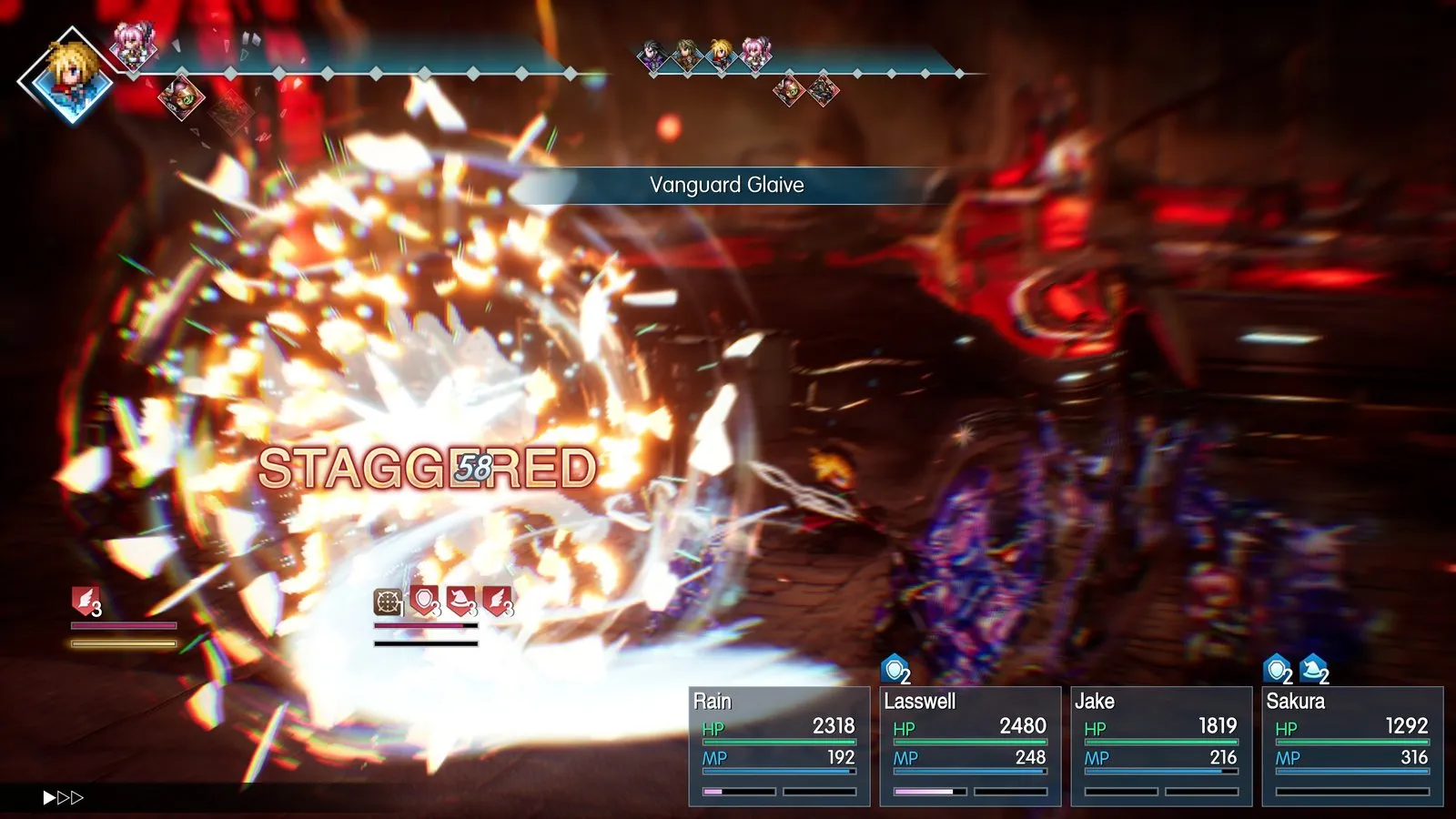
The classic mistake in this game is picking the biggest single hit every turn. The better order is: read the action timeline, then work out whether you can empty the enemy’s stagger gauge before it acts. Once the gauge is empty the enemy loses that turn and its defence drops — that is when you spend your damage.
Four things to read every turn
- The action timeline: left to right is who acts next, your party and the enemy on the same track.
- The enemy’s stagger gauge: it sits under the HP bar. Square Enix’s wording is “deplete”.
- Who is about to take a hit: heal or guard the low-HP character instead of hoping.
- What this turn is for: keep pushing the gauge, or cash in while the enemy cannot act.
The job system: what is confirmed, what is not
Square Enix lists an “evolved job system” (進化したジョブシステム) among the game’s features, so job growth is definitely part of the design. But the publisher has not published a job list, change conditions, skill trees or numbers — so every “full job tier list” you see right now is guesswork, and we don’t publish one.
What players can confirm is that growth splits two ways: character level and gear, plus per-character Vision levelling. A Vision maxed on Rain is not maxed on Lasswell. That means your resources go into “this Vision on this character”, not “levelling Cloud” in general. How to spend them: see Vision awakening.
Visions and skills
The story hands you Visions, crystals formed from a hero’s essence. Equip one, win fights, and you learn new abilities. Swap the Vision out and the abilities you already learned stay available — they just count against a cost cap. So changing a Vision never wastes progress.
After the stagger: Sweeping Stagger and Resonance
Square Enix’s notes say that completing a Sweeping Stagger lets you fire a Vision-exclusive Resonance at the end of the Extra Phase. Resonances are not all straight damage — some carry area or other effects.
How Espers fit in
Espers are summonable allies, not the same system as Visions: Visions are equipped and teach skills, while an Esper is a unit that joins temporarily. Square Enix confirms they fight for three turns and leave after a finisher on the last one. Treat them as a three-turn support window, not an extra party member. More detail in Espers.
Running away: what players measured
Square Enix has published nothing about escape rates, so what follows is players’ testing, not official design. One player ran 20-attempt batches in the early Earth Shrine and found that escapes look guaranteed on a pre-emptive encounter, and effectively guaranteed on the third attempt in the same encounter. Level, gear and Vision progress only push the rate up — roughly half to two-thirds at low level, near nine in ten once you are invested. That is a few dozen attempts, not official data, and Casual and Expert do not behave the same.
Practical takeaway: with a mob you cannot beat early, escape immediately on a pre-emptive encounter and keep trying up to the third attempt on a normal one. Rather than gambling on escape rate, spend your resources on the abilities that break the stagger gauge.
What Square Enix has not published
Full-game numbers, enemy exceptions, the complete skill list, the job table and the optimal party are all unpublished. The mechanics above come from Square Enix’s own notes; the escape section is player testing, and we label the difference.
Sources:
Related articles
combat
FINAL FANTASY RESONANCE Espers: Allies That Fight for Three Turns
Espers are summoned units that fight for three turns, fire a finisher and leave. They are a different system from equipped Visions. Full roster is unpublished.
combat
FINAL FANTASY RESONANCE Vision Awakening: Tablet Shards and Magicite
Collect Tablet Shards, hand them to the princess at Oblivion Palace for Magicite, then spend it to awaken a Vision. What you get and who to upgrade first.
characters
FINAL FANTASY RESONANCE Characters and Visions: The Full 26 Roster
Your party is Rain, Lasswell and Fina; the legacy heroes arrive as Visions, and Square Enix has revealed 26 of them. The roster and official videos.